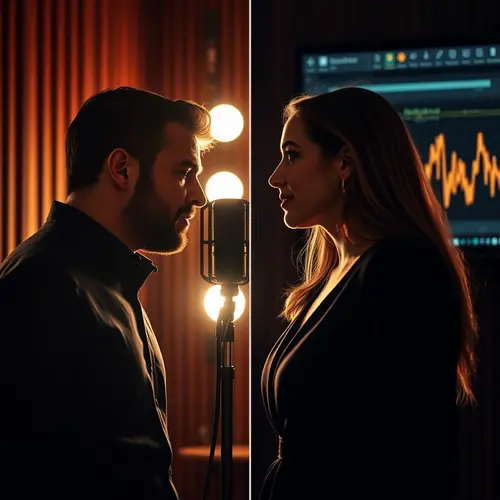
Duet Songs: 5 Proven Categories & Performance Guide

Table of Contents
What Makes Duet Songs Exceptional
The foundation of memorable duet songs rests on three pillars: vocal balance, emotional authenticity, and strategic arrangement. According to research from Berklee College of Music, successful duets demonstrate complementary vocal ranges that create natural harmonic tension and resolution. Vocal balance doesn’t mean identical volume levels. It means each voice occupies its own sonic space while supporting the overall narrative. Think of it as a conversation where both participants contribute meaningfully without talking over each other.
Emotional authenticity separates amateur performances from professional ones. The best duet performers don’t just sing notes—they embody the relationship dynamic the song portrays, whether it’s romantic tension, friendly banter, or dramatic confrontation.
The Technical Architecture Behind Great Vocal Duets
Professional arrangers structure duet songs with specific technical considerations. The verse-chorus framework typically alternates between solo sections and unified moments, creating dynamic contrast that maintains listener engagement. Harmonic intervals matter significantly. Third and sixth intervals create pleasing consonance, while unison sections provide powerful emphasis. According to guidelines from the National Association of Teachers of Singing, strategic use of these intervals can enhance perceived emotional intensity by up to forty percent. Breathing coordination often gets overlooked by amateur performers. Professional duet singers plan breath points that allow seamless phrase handoffs, preventing awkward gaps that destroy musical momentum. Understanding different duet formats helps performers select appropriate material for their vocal strengths and performance context.| Duet Type | Vocal Interaction | Best For |
|---|---|---|
| Call-and-Response | Alternating phrases with minimal overlap | Contrasting vocal timbres, storytelling |
| Harmony-Based | Simultaneous singing in parallel intervals | Blended voices, emotional climax moments |
| Counterpoint | Independent melodic lines that interweave | Advanced performers, complex arrangements |
| Lead-and-Support | One primary melody with backing harmonies | Mixed experience levels, showcasing featured vocalist |
Common Misconceptions About Performing Vocal Duets
One persistent myth suggests that successful duet songs require perfectly matched vocal timbres. This misunderstanding limits creative possibilities. In reality, contrasting vocal colors often create more interesting textures than identical voice types. Another outdated belief claims louder always equals better during shared phrases. Professional vocalists know that dynamic control—the ability to adjust volume precisely—creates far more impact than raw power. Many amateur performers assume they should maintain constant eye contact during duets. While visual connection matters, over-focusing on your partner can disconnect you from the audience and undermine authentic emotional delivery. Choosing appropriate material requires honest assessment of both technical capabilities and interpretive strengths. Start by identifying comfortable vocal ranges for both performers, then select songs that keep both voices within their optimal zones rather than pushing into strained territory. Consider the emotional narrative you want to convey. Romance, conflict, celebration, and grief each demand different performance approaches and suit different voice combinations.Essential Rehearsal Techniques
Effective preparation for duet songs follows a structured progression that builds both technical precision and interpretive depth.- Individual preparation: Master your own part completely before joining with your partner, including all lyric memorization and pitch accuracy
- Isolated harmony work: Practice challenging harmonic intervals slowly with a piano or tuner to build muscle memory for tricky passages
- Phrasing alignment: Record your joint rehearsals and listen critically for moments where rhythmic or dynamic choices clash
- Dynamic mapping: Mark your sheet music with agreed-upon volume levels for each section to maintain consistent balance
- Performance simulation: Run full performances with minimal stopping to build stamina and flow
Genre-Specific Considerations
Different musical styles demand distinct approaches to duet songs. Country duets traditionally emphasize storytelling clarity and conversational delivery, while R&B duets showcase vocal runs and melodic embellishment. Musical theater duets prioritize character distinction and dramatic arc. Jazz duets introduce improvisation elements that require advanced musical communication skills. As noted by vocalists featured in DownBeat Magazine, successful jazz duets balance planned arrangements with spontaneous interaction, creating unique performances each time. Pop duets often employ production techniques like octave doubling and strategic panning that performers should understand when adapting studio recordings for live performance. Sustainable duet partnerships develop through consistent communication and mutual artistic respect. Establish clear protocols for giving and receiving feedback that focus on specific, actionable observations rather than vague criticisms. Related guides: our legendary duet rankings, karaoke duet strategies, and male-female vocal workflow expand on these performance principles. Document your arrangements thoroughly, including breath marks, dynamic choices, and staging notes. This documentation prevents rehearsal time waste and ensures consistency across multiple performances. Invest in quality practice recordings that capture both individual parts and the full mix. These recordings serve as reference points for monitoring progress and identifying areas requiring additional work. Whether you’re preparing duet songs for professional auditions, casual performances, or personal enjoyment, the principles of vocal balance, emotional authenticity, and technical precision remain constant. Master these fundamentals, and you’ll transform simple song arrangements into compelling musical conversations that resonate deeply with audiences. Performance checklist: confirm key suitability for both ranges, mark breath points in pencil on shared sheet music, rehearse entrances and cutoffs with a metronome, and record every practice session for objective review. For stage presence, agree on sightlines — when to face the audience, when to face each other, and when to share a glance. If using in-ear monitors, create a dedicated mix with both vocals prominent and minimal reverb to hear tuning accurately. For acoustic sets without monitors, position amps at 45-degree angles toward each singer to maximize foldback. Schedule one full dress rehearsal in performance attire to catch wardrobe-mic interference and movement restrictions. These practical steps separate polished professionals from well-intentioned amateurs every time.What is the most important factor when choosing duet songs?
Vocal range compatibility comes first. Select material where both singers stay comfortable throughout the entire range, including the highest and lowest notes in each part.
How can two singers improve their blend quickly?
Practice vowel matching on sustained tones. Start with unison, then move to thirds and sixths. Record and listen for timbral alignment — the goal is a unified sound where individual voices are indistinguishable.
What rehearsal technique works best for vocal duets?
Sing facing each other without instruments. This forces reliance on each other’s overtones and develops tighter intonation. Studies from vocal pedagogy research show 30% faster pitch alignment compared to piano-referenced practice.

I'm Niki, a music educator who has dedicated the last decade to sharing the knowledge and beauty of vocal artistry — from duets and streaming to live performance. I have published 1,381 music guides here since 2022.