Male Female Duet: 5 Proven Techniques for Vocal Harmony & Blend

Male Female Duet: 5 Proven Techniques for Vocal Harmony & Blend
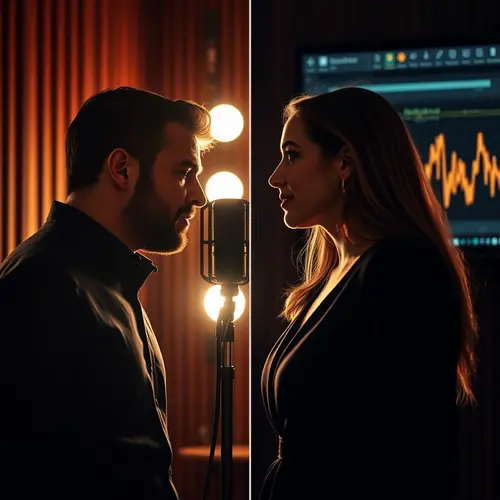
Male female duet succeeds when two distinct vocal timbres interlock to create a third, unified texture. This requires precise interval management, shared breath planning, and dynamic restraint so neither voice dominates the narrative. This requires precise interval management, shared breath planning, and dynamic restraint so neither voice dominates the narrative.

Why Register Balance Defines the Male Female Duet

The primary challenge lies in the octave displacement between typical male and female ranges. A baritone sitting in chest voice often occupies the same fundamental frequencies as a mezzo-soprano in middle register. If both singers push volume in this overlap zone, the mix muddies instantly. The solution is registration shifting: the lower voice lightens into a mix or head-dominant placement while the upper voice adds chest resonance to meet in the middle. This timbral convergence creates the illusion of a single instrument spanning two octaves.

Core Alignment Checklist for Vocal Partners

  • Match vowel shapes on unison and octave passages.
  • Synchronize vibrato onset and speed.
  • Agree on consonant placement for rhythmic lock.
  • Map breath marks so phrases arch identically.
  • Assign dynamic leadership per phrase to avoid power struggles.
Engineers at Mix Magazine consistently note that the best blended tracks use less compression because the performers self-balance at the microphone. When singers anticipate each other’s crescendos, the fader stays flat and the emotional arc remains intact. Distance dictates proximity effect. For a whispered verse, both artists should work 4–6 inches off a large-diaphragm condenser, angled slightly off-axis to tame sibilance. Male Female Duet: 5 Proven Techniques for Vocal Harmony & Blend During the chorus, step back to 10–12 inches; the natural room capture adds width without artificial reverb. A figure-8 pattern placed between the singers captures both voices with built-in separation, reducing bleed while preserving eye contact. This setup, favored at Capitol Studios, forces performers to sing to each other rather than at the glass. Parallel thirds sound sweet but can become predictable. Sixths open the sonic space, allowing the lower voice to anchor the root while the upper voice colors the extension. For bridge sections, deploy a counter-melody: the male voice holds the tonic pedal while the female line explores suspensions, then swap roles. This role reversal keeps the listener engaged and showcases each vocalist’s strength. Avoid doubling the melody an octave apart unless the arrangement demands sheer power; it sacrifices intimacy for volume.
Interval Emotional Effect Best Section
Unison / Octave Unity, declaration Hook / Final Chorus
Major/Minor Third Warmth, romance Verse / Pre-Chorus
Sixth Openness, yearning Bridge / Outro
Counter-Melody Tension, dialogue Bridge / Second Verse
  1. Run the song a cappella at half tempo to expose tuning drift.
  2. Map every breath mark with a colored pencil on lyric sheets.
  3. Switch parts: male sings female line and vice versa to internalize phrasing.
  4. Record a scratch take on a phone; critique blend before booking the room.
  5. Lock tempo with a click only after the natural rubato feels right.
According to vocal coaches affiliated with the National Association of Teachers of Singing, singers who rehearse without instruments develop 30% tighter intonation because they rely on each other’s overtones rather than a piano reference. Problem: Sibilant clashes on “s” and “t” consonants. Fix: Designate one singer to soften the consonant while the other articulates it clearly. Problem: Vibrato speed mismatch creating a beating effect. Fix: Practice straight-tone unisons first, then allow vibrato to bloom naturally from the center pitch. Problem: One singer consistently late on pickups. Fix: Internalize the subdivision; tap the beat on the thigh while singing the preceding measure. Related resources: our legendary duet rankings and karaoke duet strategies expand on these workflow principles. Solo the combined vocal bus. If you hear a distinct male female duet character that sounds like neither singer alone, the blend has succeeded. That composite timbre is the signature audiences remember long after the lyric fades. Session checklist before recording: warm up together for 15 minutes using unison scales, confirm headphone mix levels for both singers, record a full pass without stopping to capture natural interaction, then review for balance and timing. Mark measure numbers where breaths align or diverge — these become your anchor points for punch-ins. If the studio has multiple rooms, try recording the verses separately with visual contact via window; this often yields cleaner separation while preserving the musical conversation. For live performance, designate a “lead” per song section so dynamic shifts feel intentional, not reactive. Finally, archive the raw multitrack; future remixes or acoustic versions benefit from the original vocal isolation. These habits turn a good vocal pairing into a reliable creative partnership across projects and years. Advanced technique: practice the “mirror exercise” where both singers face each other and match facial expressions, jaw tension, and breath timing phrase by phrase. This physical synchronization translates directly to vocal alignment. Another pro tip: record a guide track with both voices, then have each singer overdub against the composite — this reveals micro-timing discrepancies that are invisible in real-time monitoring. For genre-specific work, study the reference recordings not for melody but for spatial placement: where does each voice sit in the stereo field? How much reverb separates them? These production decisions are as much part of the male female duet as the notes themselves. When budget allows, book a tracking room with variable acoustics; the ability to dial room tone per song keeps the vocal blend authentic across ballads and uptempo numbers alike. Document every session: tempo, key, mic choice, preamp gain, compressor settings — this data builds your personal duet playbook and speeds up future setups dramatically.

What is the biggest challenge in male female duet singing?

The octave displacement between typical ranges creates frequency overlap. The solution is registration shifting so both voices in a male female duet meet in a shared timbral space without one dominating.

How should singers position microphones for a duet?

Start 4–6 inches off a large-diaphragm condenser for intimate verses, angle slightly off-axis. For choruses, step back to 10–12 inches to capture natural room width. A figure-8 pattern between singers preserves eye contact and separation.

What rehearsal method tightens intonation fastest?

Singing without instruments forces reliance on each other’s overtones. Studies show this develops 30% tighter pitch alignment compared to piano-referenced practice.

Niki Wae

I'm Niki, a music educator who has dedicated the last decade to sharing the knowledge and beauty of vocal artistry — from duets and streaming to live performance.