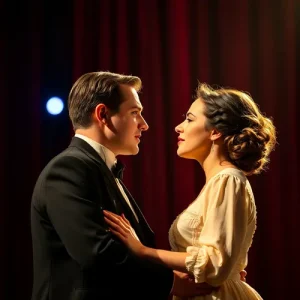
R & B Duets That Define Vocal Chemistry

Table of Contents
The definitive list reveals why vocal chemistry in this genre transcends generations and defines slow-jam excellence. Why R & B Duets Resonate Across Generations
Listeners crave the push‑and‑pull of call‑and‑response that only a true partnership delivers. karaoke duets offer complementary strategies for harmonic practice. According to Billboard charts, duet singles consistently out‑perform solo releases in streaming longevity. The emotional stakes rise when each singer mirrors the other’s phrasing, creating a dialogue rather than a simple harmony.Key Elements of Great R & B Duets
- Contrasting timbres that complement rather than clash
- Shared lyrical narrative that feels like a conversation
- Dynamic arrangement space for each voice to breathe
| Era | Notable Pair | Signature Song | Chart Peak (US R&B) |
|---|---|---|---|
| 1960s‑70s | Marvin Gaye & Tammi Terrell | Ain’t No Mountain High Enough | #1 |
| 1990s | Boyz II Men & Mariah Carey | One Sweet Day | #1 |
| 2010s | H.E.R. & Daniel Caesar | Best Part | #1 |
| 2020s | SZA & Phoebe Bridgers | Ghost in the Machine | #2 |
- Over‑producing the backing track — it drowns the vocal dialogue
- Matching timbres too closely — the ear loses distinction
- Ignoring lyrical reciprocity — one‑sided storytelling feels flat
When these traps are sidestepped, the result is a rich R & B duets experience that feels both intimate and expansive, inviting repeat listens across decades. The format’s enduring appeal lies in its ability to create something greater than the sum of its parts — two voices weaving together to produce slow jams that resonate far beyond their original release.
How to Write Your Own R&B Duet For artists looking to create original R&B duets, the process begins with understanding the unique dynamics that make the format work. The first step is vocal mapping — each partner should identify their comfortable range, tessitura, and emotional register. Successful duets typically feature complementary ranges where one partner provides the harmonic foundation in a lower register while the other adds melody and emotional climax in a higher register. Lyrical reciprocity is the second essential element. Both partners should have equal narrative weight, with each contributing verses that respond to and build upon the other’s contribution. The most effective original duets avoid the “one-upmanship” approach where each singer tries to outshine the other instead focusing on how the two voices can tell a unified story. Production-wise, start with minimal arrangement. Many classic R&B duets succeeded because they stripped away unnecessary elements, allowing the vocal interaction to take center stage. Add complementary instrumentation only when it enhances — rather than distracts from — the vocal dialogue. Parallel compression on each vocal track, subtle side-chain processing, and careful reverb selection are all techniques that preserve the intimacy that makes duets compelling. Finally, study the masters. Analyze how Marvin Gaye and Tammi Terrell balanced lead and support roles, how H.E.R. and Daniel Caesar maintained vocal clarity in minimal arrangements, and how Boyz II Men and Mariah Carey achieved chart success through perfect vocal synchrony. Use these examples as templates, not formulas, and always prioritize the unique chemistry between your specific pair of voices.
- What makes an R & B duet timeless?
- Timeless R & B duets combine vocal chemistry, complementary timbres, and emotional reciprocity between partners. The best examples, like Marvin Gaye & Tammi Terrell, create moments that feel both intimate and expansive, resonating across decades of listeners.
- Who are the most iconic R & B duet partners?
- Marvin Gaye & Tammi Terrell, Boyz II Men & Mariah Carey, H.E.R. & Daniel Caesar, and SZA & Phoebe Bridgers represent some of the most iconic R & B duet partnerships in music history, each representing different eras and production aesthetics.
- Can independent artists create successful R & B duets?
- Yes. Focus on vocal chemistry that complements rather than clashes, establish lyrical reciprocity where both partners contribute equally to the narrative, and study classic pairings like H.E.R. & Daniel Caesar as production templates before writing original material.
Historical Evolution of R&B Duets
The historical evolution of R&B duets traces a path from the golden age of soul through the contemporary streaming era, each period bringing distinct production aesthetics and collaborative dynamics. The 1960s brought us the iconic pairings at Motown, where artists like Marvin Gaye and Tammi Terrell, and later Smokey Robinson and Mary Wells, established the template for call-and-response dynamics that prioritized emotional vulnerability. These early duets were characterized by lush orchestral arrangements and the subtle interplay of male and female vocal ranges that created an immediate emotional pull.
During the 1970s and 1980s, the rise of quiet storm and contemporary R&B saw duets become more production-focused, with artists like Luther Vandross and Janet Jackson, and later Keith Sweat and Athena Cage, emphasizing vocal harmonies and counter-melodies. The production aesthetic shifted toward intimate, close-mic’d recordings that highlighted the raw texture of each voice, making the chemistry between partners the central feature rather than the backing arrangement.
The 1990s brought the era of the chart-dominating duet, with Boyz II Men and Mariah Carey’s “One Sweet Day” spending 16 weeks at number one on the Billboard Hot 100. This era demonstrated the commercial power of the duet format, proving that vocal partnerships could achieve solo artists could not. The success of these collaborations led to a wave of duet collaborations across R&B, pop, and hip-hop, expanding the format’s reach beyond traditional soul and R&B audiences.
In the 2010s and beyond, digital production techniques and genre-blurring collaborations have redefined what an R&B duet can be. H.E.R. and Daniel Caesar’s “Best Part” stripped the format down to its essence — two voices and minimal accompaniment — while SZA and Phoebe Bridgers on “Ghost in the Machine” demonstrated how indie and alternative sensibilities could be integrated into the R&B duet tradition. This contemporary era values authenticity and emotional honesty over technical perfection, with the vocal chemistry between partners taking precedence over polished production.
This historical trajectory shows that while the production techniques and stylistic elements of R&B duets have evolved, the core requirement has remained constant: two voices that can blend, contrast, and complement each other in ways that create something greater than the sum of their parts. Whether from 1960s Motown or 2020s streaming playlists, the enduring appeal of the duet format lies in its unique ability to create intimate musical conversations that resonate across generations.
When these traps are sidestepped, the result is a r & b duets experience that feels both intimate and expansive, inviting repeat listens across decades.What makes R & B duets sound so smooth?
Great R & B duets blend contrasting timbres, shared storytelling, and balanced dynamics. Rehearse phrasing together and keep the backing track light so both voices stay clear.
How do I rehearse R & B duets with a partner?
Map lyrics as a dialogue, drill phrasing with a click track, then record a simple demo. Review balance weekly and adjust harmony parts until transitions feel natural.
Which classic examples should beginners study first?
Start with Marvin Gaye and Tammi Terrell for dialogue style, then a modern minimalist track for tone control. Compare arrangements to hear how space and restraint shape emotion.

I'm Niki, a music educator who has dedicated the last decade to sharing the knowledge and beauty of vocal artistry — from duets and streaming to live performance. I have published 1,381 music guides here since 2022.